During October 26–November 1, 2026, Apple introduced new computers, AI tools gained more practical file features, and researchers demonstrated another ambitious experiment. The most useful change is not always the loudest announcement: a source link beside a spreadsheet answer may save more work than a polished vision of the future.
This issue covers ten developments, who they matter to, and what to check before using them. Dates identify the official announcement; later sales dates and gradual rollouts are marked separately. Availability was checked as of November 2. Our previous October 5–25 digest provides the background if you missed earlier weeks.
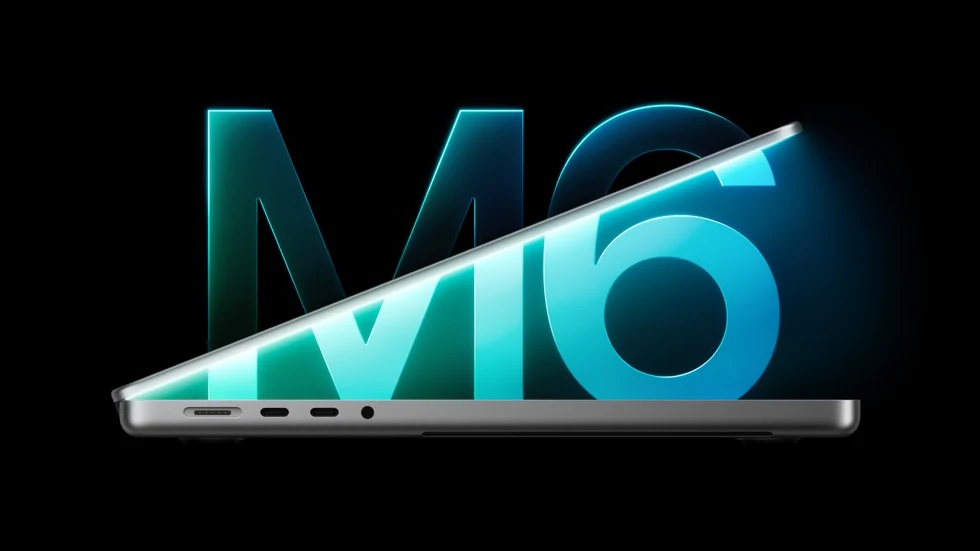
Cover image: the official MacBook Pro with M6 image from Apple Newsroom.
1. GPT‑6.1 Terra puts more emphasis on visual work
October 26. OpenAI introduced GPT‑6.1 Terra, emphasizing visual understanding, interface work and writing. Product availability depends on the plan and environment; the ChatGPT release notes describe rollout details. A vendor’s performance announcement is a starting point for evaluation, rather than a substitute for checking the result on your own task.
A useful first test. Provide a screenshot with anonymized data and ask the model to identify the visible evidence behind its conclusion. For example, have it explain a mismatch between a chart and a total row. For interface tasks, start with a proposed action plan and keep purchases, publication and deletion behind separate confirmation. Judge whether the answer is correct and whether it acknowledges missing information, rather than how confidently it is written.
2. iPad mini moves to OLED
October 26. The new iPad mini brings an 8.5-inch OLED display, A20 Pro and IP67 protection. Apple opened preorders on October 28 and announced availability beginning November 6. At the time of this digest, that means choosing a configuration or placing a preorder, rather than assuming it is already in stock everywhere.
Who should look closer? For reading and notes on the move, check the weight with a case, small-text comfort and your essential apps. For drawing, accessory compatibility matters; for video, the panel technology is only part of comfortable viewing. Compare the total price of the setup you actually need. Our iPad mini buying guide collects the details and questions worth resolving before ordering.
3. MacBook Pro and iMac gain M6
October 27. Apple announced the 14-inch MacBook Pro with M6 and iMac with M6. Preorders for these models began on October 28, with availability announced for November 6. The changes cover processing capabilities and wireless connectivity; ports and memory should be checked against the exact configuration you select.
How to make the decision. Write down what limits your current computer: memory, storage, one particular application or the need to work away from power. That helps you buy a solution to a real constraint rather than a new chip name. A laptop-versus-desktop comparison should also include the display, peripherals and where you work. Our M6 configuration guide explains those choices without treating every upgrade as necessary.
4. Apple Creator Studio prepares a November update
October 27. Apple announced new Creator Studio features, including MotionVFX integration in Final Cut Pro, Generate Fill in Pixelmator Pro and AI assistants across several apps. Some capabilities are in beta. The update is planned for November for existing subscribers; the announcement does not establish that every feature is already available on November 2.
A practical approach. Avoid rebuilding a deadline-sensitive workflow around an announcement. Keep a project copy and try the new feature on a short section first, checking fonts, effects, timing and links to source files. In a team, confirm that colleagues can open the result as well. The Creator Studio explainer separates the proposed capabilities from the limits that matter when you plan an actual project.
5. Genie 4 demonstrates steerable worlds with sound
October 27. Google introduced its Genie 4 research into interactive environments controlled through natural language. The model generates audio during interaction. At announcement, access was rolling out to a limited group of trusted testers; Google AI Ultra in Project Genie and selected API and AI Studio partners were identified as forthcoming access routes.

How to assess a demo. Watch whether objects remain consistent after a camera turn, whether actions fit the scene and whether a desired outcome can be repeated. An attractive clip alone does not establish suitability for worker training or testing physical equipment. A creative sketch and a reliable simulation have different requirements. Our Genie 4 guide explains the access conditions and why those boundaries matter.
6. XREAL AURA brings Android XR to wired glasses
October 28. Google and XREAL announced the AURA launch with Android XR. Processing and the battery live in a separate, cable-connected puck. Orders opened in the US, Canada and Korea, with Japan listed for November 2. Those launch markets do not establish official availability in every other country.
Before buying. Check how your particular laptop connects, the return policy and whether you can try the glasses. Comfort, text legibility and a cable across the desk can matter more than an impressive virtual screen. For travel, consider the complete kit and its power needs, not just the glasses’ weight. The separate AURA article helps turn those practical questions into a buying checklist.
7. Google Sheets adds sources to AI answers in cells
Announced October 28. Google added web-source citations to AI function results in Sheets and support for requests covering up to 3,000 cells. Rollout had already begun on October 20, and access depends on an eligible subscription. This is a web spreadsheet feature, rather than a promise that every account will immediately show it.
Why it helps. A list of products, companies or universities becomes easier to check when an answer leads directly to its source. Still, the presence of a link does not validate the number: open it and check the date, currency and units. Process a small sample first, refine the output format, then handle the full column. For information that will drive a decision, keep a separate field recording whether a person actually verified it.
8. Gemini lets you edit files within a conversation
October 29. Gemini gained file creation, preview and editing inside chat. Google distinguishes platforms: PDF support covers web and mobile, while the other listed formats are supported on the web. The announced language coverage follows the languages in which Gemini is available, rather than singling out a few selected localizations.
A useful workflow. Turn your own notes into a short instruction document, correct an inaccurate paragraph manually, then ask for consistent terminology. After downloading, open the file in the application its recipient will use and inspect page breaks, tables and formulas. That exposes the difference between an attractive preview and a usable deliverable. Our practical Gemini file guide includes example prompts and Google’s demonstration video.
9. OpenAI backs a shared AI-training preference signal
October 30. OpenAI announced support for a common robots.txt signal through which website owners can express preferences about using content for foundational generative AI training. The company aims to implement it in the coming months. Its existing crawler controls continue to apply; the announcement does not mean that those controls have already been replaced.
For website owners. First decide which uses of your material you want to allow or limit. Keep a copy of your configuration and inspect actual crawler requests in server logs. Do not treat the new signal as a search-ranking recovery method or an access password for your content. Our robots.txt explainer covers the distinctions between crawlers and the checks to make before changing a live site.
10. Project Suncatcher receives an AI response from orbit
October 30. Google reported its first AI response from a data-center-class TPU in orbit. The Project Suncatcher prototype, launched on October 1, processed a prompt using Gemma 4. Thermal-stress and radiation tests lie ahead. This is a research milestone, rather than the launch of a commercial orbital data center.
Why it is being watched. The interesting questions now concern sustained operation and communication, not simply whether one answer can be returned. Readers do not need to act on this announcement; it illustrates a direction in infrastructure research. A successful short test should not be extrapolated into future service prices or reliability. The team’s video from the official announcement appears below.
What to take into your working week
- Working with documents? Try one small file in Gemini and check the exported version in your usual application.
- Planning a purchase? List your memory, port, accessory and service requirements before the new Apple devices go on sale.
- Testing AI tools? Keep a consistent reference task so you can compare the result instead of the promotional video.
For an iPhone you already own, our step-by-step iOS update guide includes genuine Apple settings images. It is a practical companion to the digest, rather than another launch announcement from this week.



Join the conversation
Stay on topic and respect other readers. Your first comment may appear after editorial review.