
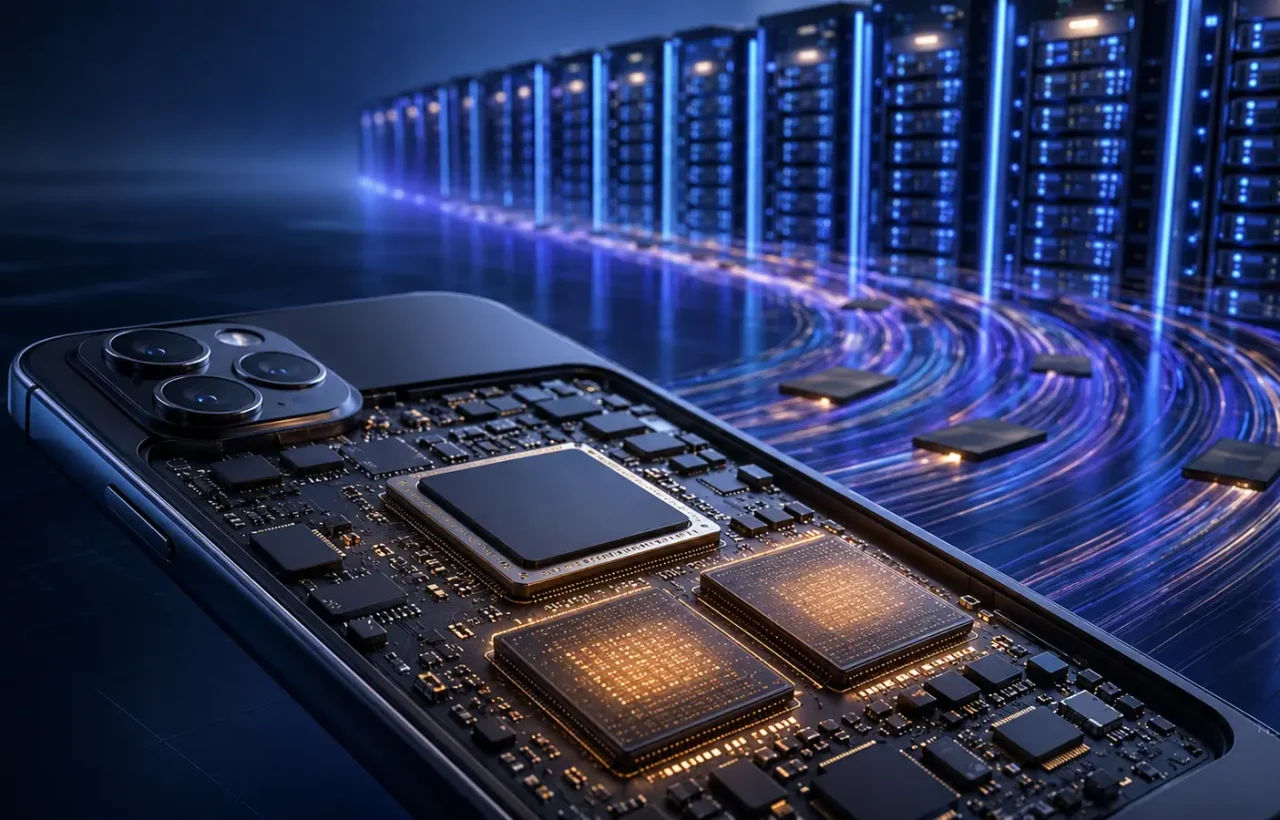
Two earnings updates have exposed the same problem from opposite sides. Qualcomm is preparing to pass higher supply-chain costs into product pricing, while Samsung has simultaneously reported record memory-chip profits and a loss in its mobile and networks segment. That increases the risk of more expensive smartphones, but it does not mean every model will automatically rise by the same percentage.
The pressure is not a simple “shortage of every chip.” AI data centers are rapidly increasing demand for server memory, storage, manufacturing capacity and advanced packaging. Consumer-electronics companies must compete for parts of the same supply chain, while weak handset demand makes it difficult to pass every additional cost to buyers without consequence.
What Qualcomm confirmed
In its third-quarter fiscal 2026 results, Qualcomm reported $9.9 billion in revenue. QCT Handsets revenue—the platforms and components business serving phones—was $5.1 billion, down 20% from a year earlier. The company explicitly described the memory and supply environment as challenging.
The pressure extends beyond memory. Wafers, assembly, testing, advanced packaging and other materials are becoming more expensive. According to Reuters following Qualcomm’s earnings update, the company intends to offset those increases through higher customer pricing. The benefit is expected to emerge gradually over the next two quarters as existing contracts expire and new product cycles begin.
Qualcomm CEO Cristiano Amon confirmed that price changes would begin on September 1 and said terms were being negotiated with customers individually, Reuters reported. Earlier, Bloomberg and then Reuters reported on a purported customer letter pointing to double-digit percentage increases for products shipped after that date. Qualcomm declined to comment at the time, and Reuters could not independently verify the letter. The double-digit figure should therefore not be treated as an official universal list price for every Snapdragon platform: terms, products, volumes and contracts vary.
Samsung profits from memory but loses money in mobile and networks
Samsung reported consolidated revenue of KRW 171.5 trillion and operating profit of KRW 89.5 trillion for the second quarter. Device Solutions, which includes the semiconductor businesses, generated KRW 127.5 trillion in revenue and KRW 89.2 trillion in operating profit. Server and AI demand, together with higher average selling prices, produced another record quarter for memory.
At the same time, MX and Networks posted KRW 33.2 trillion in revenue and an operating loss of KRW 0.7 trillion. This is a combined mobile-devices and network-equipment segment, so the entire loss should not be attributed to smartphones alone. Samsung nevertheless identifies elevated component costs as a source of pressure on profitability and says it will pursue efficiency measures to mitigate the impact.
| Company | Confirmed signal | Possible handset implication |
|---|---|---|
| Qualcomm | Higher wafer, memory, packaging, assembly and testing costs; gradual customer price increases | More expensive mobile platforms can raise the cost of building new devices |
| Samsung | Record chip-unit profit but an MX and Networks loss under component-cost pressure | Even a major memory producer is not insulated from higher costs inside its own device business |
Where the shortage signal is concentrated
In these reports, the main shortage signal concerns memory and AI infrastructure. Samsung expects accelerating demand for server DRAM, enterprise SSDs and HBM to keep supply below demand in the second half of 2026, even as demand for mobile and PC memory partly moderates. Citing Samsung’s earnings call, Reuters reported that the company expects the global shortage to intensify and extend into 2028.
HBM for AI accelerators, server DRAM and mobile LPDDR are not the same product. A phone processor cannot simply be replaced by a server GPU either. The connection exists at the level of capital spending, wafers, materials, packaging and capacity allocation: manufacturers direct more resources toward markets with stronger long-term demand and higher margins. It is therefore more accurate to describe a constrained supply chain and shortages in particular categories than a complete absence of all semiconductors.
How handset makers could respond
A chip price increase does not flow into a phone’s retail price one-for-one. The processor and memory are only part of the bill of materials; displays, cameras, batteries, software support, logistics, taxes, marketing and retail margins also matter. Manufacturers have several possible responses:
- raise the launch price of a new model;
- hold the list price but offer fewer discounts or bonuses;
- use a previous-generation processor or a cheaper platform;
- change the base RAM or storage configuration;
- accept a lower margin to protect market share.
These are market scenarios, not announced plans from every brand. Premium devices and complex form factors may give a manufacturer more room to justify a higher starting price, but buyers also compare cameras, battery life, support and repair costs more carefully at that level.
Why store prices may not change immediately
The September 1 date concerns the beginning of Qualcomm’s wholesale pricing changes, not retail price tags the following morning. Device makers already hold inventory, long-term contracts and products whose costs were fixed earlier. Manufacturing, distribution and new-model launches introduce further delays. Qualcomm has also said the benefits of higher pricing will appear gradually rather than in one quarter.
Weak consumer demand pushes in the other direction. If buyers are unwilling to upgrade more often, a brand may absorb part of the increase, reduce marketing spending or adjust a configuration instead of directly raising the recommended price. Competition among Qualcomm, MediaTek, Samsung and manufacturers’ in-house silicon can also limit how mechanically each additional cost percentage point is passed to consumers.
Should you buy a phone early because of the shortage?
There is no reason to panic-buy a phone solely because of shortage headlines. Existing models are not guaranteed to become more expensive, and seasonal promotions, competition and retail inventory can outweigh component pressure. It is more useful to evaluate the specific model, local price, support period and independent testing.
For buyers planning a flagship or foldable device in late 2026 or 2027, the risk of less generous discounts and more expensive configurations appears to have increased. Final evidence, however, will come from the pricing of the next device generations—not from earnings reports alone. What is confirmed today is rising input pressure and shortages in selected chip categories, not an inevitable identical price increase for every smartphone.




Join the conversation
Stay on topic and respect other readers. Your first comment may appear after editorial review.