

The week of August 3–9 brought several layers of technology change together. ChatGPT gained a new way to control answer depth, OpenAI publicly tightened controls around the unreleased Astra model, and a self-propagating npm worm showed how quickly trust in one package can become risk across hundreds of dependencies. WordPress also shipped an urgent security update, while Cloudflare open-sourced a platform for governed workplace agents.
The consumer and science stories matter just as much. Ask Maps is beginning to prepare real-world actions instead of only answering questions; Prime Video is rolling out HDR10+ ADVANCED on compatible Samsung televisions; and WeatherNext promises more preparation time before tropical cyclones. NASA provided two very different examples of better observation changing both forecasts and fundamental physics, from a narrower solar-storm arrival window to a possible signature of vacuum birefringence around a magnetar.
We selected ten developments announced or materially updated during these seven days and separated what is available now from staged rollouts, internal evaluations and preliminary scientific results. RozumTech also published standalone explainers this week on ClickFix targeting Mac users and Microsoft Edge’s Manifest V2 phase-out, so they are linked here rather than repeated as digest entries.
In brief: ten stories from the week
- OpenAI updated GPT‑5.6 Sol in ChatGPT and is expanding Luna access for Free and Go users.
- Preliminary Astra tests led OpenAI to strengthen cybersecurity controls, but the model is unreleased and has not been conclusively classified.
- ChainDrop poisoned npm packages, stole credentials and attempted to propagate through developer machines and CI systems.
- WordPress 7.0.3 fixed a set of vulnerabilities including pre-auth XSS and SSRF access to link-local ranges.
- WeatherNext Cyclones averaged at least a day of lead-time advantage for track, intensity and wind-field forecasts in research evaluations.
- Cloudflare open-sourced Cloudflare OS for agent workspaces, modifiable apps and governed data access.
- Ask Maps added partial execution of multi-step tasks, live transit delays and optional context from Gmail.
- Prime Video is beginning to stream compatible titles in HDR10+ ADVANCED, initially on Samsung’s 2026 TVs.
- PUNCH narrowed a solar-storm arrival estimate to 30 minutes in its first retrospective proof of concept.
- IXPE recorded the strongest signal yet of a quantum-vacuum effect predicted 90 years ago.
1. GPT‑5.6 Sol in ChatGPT gets a reasoning slider and more focused answers
What happened. On August 6, OpenAI updated GPT‑5.6 Sol in ChatGPT for Plus and Pro users. One model now handles both quick and deeper responses, while a new slider on the web, mobile and desktop lets the user choose how much computational effort to spend on a request. The company also says responses are more direct, use less unnecessary formatting and make better use of retrieved sources when an answer depends on dates, numbers or rules.
GPT‑5.6 Luna is due to become the default model for Free and Go accounts during the week. OpenAI said unlimited text chats with Luna and a separate Think button for harder questions would begin rolling out the following week, meaning the week beginning August 10. “Unlimited” applies to text and remains subject to abuse guardrails; file, image and other tool limits still apply. The Sol version used by Work and Codex is not changing as part of this ChatGPT release.
What it means. In OpenAI’s internal evaluation, responses containing at least one factual error were about 62% less common for Luna and 68% less common for Sol than for GPT‑5.5 Instant. Those are vendor measurements, not an independent guarantee for every domain. A sensible workflow is to keep effort low for drafts and routine questions, turn it up for decisions, research or code, and still verify dates, amounts and links whenever a mistake would have consequences.
2. OpenAI cannot rule out Critical cyber capability in Astra
What happened. OpenAI said on August 7 that its latest internal evaluations of the upcoming Astra model showed substantial progress in agentic coding and cybersecurity. The preliminary results and expert assessments are strong enough that the company currently cannot rule out the Critical level under its Preparedness Framework. That threshold includes, among other abilities, autonomously finding and developing functional zero-days across many hardened systems or executing a novel end-to-end attack strategy from a high-level goal.
OpenAI is strengthening test isolation, network and tool restrictions, model-weight encryption and protection, risky-action monitoring and sandboxed execution. Internal Astra activities that do not yet meet those requirements have been paused. This is not a complete stop to development. The company also explicitly says Astra is unreleased, the assessment remains preliminary, and the model was not involved in exploiting Hugging Face.
Why it matters. A capability threshold changes more than answer quality: it changes the minimum conditions for a safe evaluation. Organizations testing cyber-capable models need deny-by-default networks, synthetic targets, independent monitoring and automatic stops for unexpected activity—not nominal “lab” machines with accidental internet access. Readers should also avoid the stronger claim that “Astra has been classified Critical.” The supported claim is that OpenAI cannot currently rule out that level and is preparing stronger controls.
3. ChainDrop turns npm dependencies into a self-propagating attack path
What happened. Researchers identified an active compromise on August 4 affecting keyv, cacheable, flat-cache and related npm namespaces. In StepSecurity’s investigation snapshot that day, ChainDrop had inserted malicious code into 444 packages and 2,212 versions in under four hours. Those figures describe one point in a live investigation, not a final count of compromised devices.
Microsoft Threat Intelligence described the same mechanism as a Mini Shai-Hulud variant. A preinstall script launched an obfuscated Bun payload that searched for npm and GitHub tokens, cloud and CI/CD credentials, keys and secrets. Stolen publishing access was then used to poison more packages. A package could continue providing its legitimate features, so a build completing successfully does not prove that the installed version was safe.
What developers should do. Check exact name@version entries in package-lock.json, yarn.lock or pnpm-lock.yaml, including transitive dependencies. If an affected release executed on a laptop or runner, deleting it from a lockfile is insufficient: isolate the environment, reissue any reachable npm, GitHub, cloud and Vault secrets, inspect publishing and CI logs, and rebuild from a trusted state. Download totals are not infection counts, but they do indicate the potential blast radius.
4. WordPress 7.0.3 closes a consequential set of security flaws
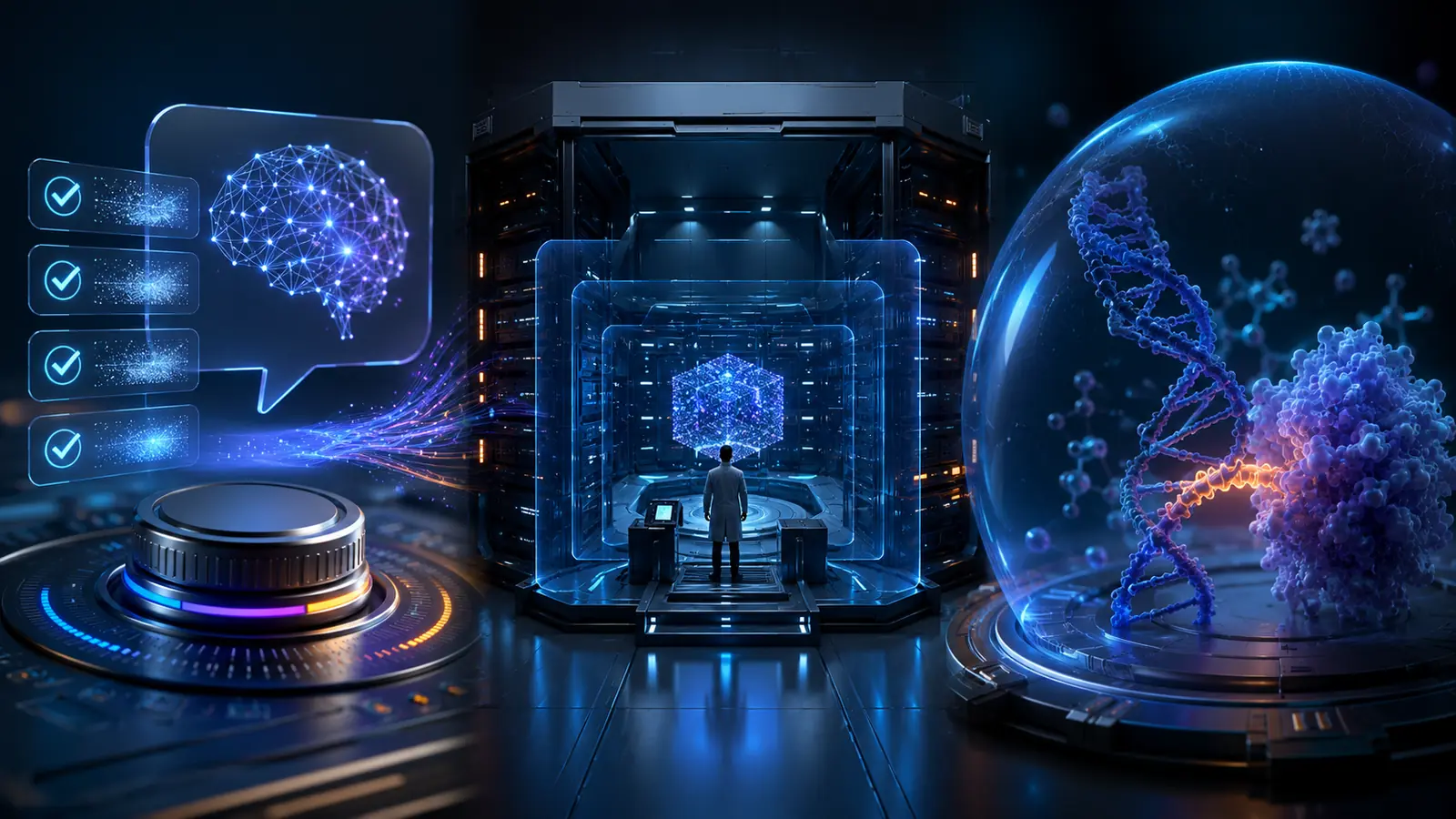
What happened. WordPress.org released WordPress 7.0.3 on August 6 and recommended updating sites immediately. The headline issue is a reflected XSS flaw on the login screen that requires no prior authentication and could potentially lead to PHP code execution. The release also fixes several Contributor-level stored XSS paths, a safe-CSS filter bypass, disclosures involving protected posts and comment feeds, post-slug enumeration, and an SSRF weakness that let URL validation reach link-local ranges.
Another fix addresses privilege escalation on Multisite networks with user registration enabled, while a separate issue allowed the email confirmation flow to be bypassed. Exploitation conditions differ: some flaws require a Contributor or Author account, a particular block, Multisite or a specific configuration. That is not a reason to delay the patch, but it does mean that not every WordPress installation had identical exposure. Relevant fixes are also being backported to older branches that remain eligible for security updates.
A safer update. Make a verified backup of files and the database, record critical plugin versions, apply 7.0.3 in staging or a short maintenance window, then test login, forms, the editor, caches and language variants. Review logs for suspicious requests to wp-login.php and unexpected user changes afterward. Automatic updates reduce patch delay, but they do not replace compatibility testing or a rehearsed recovery path.
5. WeatherNext Cyclones gives forecasters at least a day more lead time on average
What happened. Google DeepMind presented WeatherNext Cyclones on August 6. The model jointly predicts global weather, a cyclone’s track, intensity and wind radii for as long as 15 days. It can generate an ensemble of up to 1,000 plausible scenarios, exposing not just the central path but low-probability, high-impact deviations and rapid-intensification cases.
The accompanying Nature paper evaluated cyclones from 2023–2025. Across track, intensity and wind-field size, WeatherNext Cyclones provided an average of a day or more of lead-time advantage over leading operational systems—roughly comparable to a decade of historical progress in those measures. Google released code and weights for WeatherNext Cyclones, WeatherNext 2 and the smaller 2-mini. Nature labels the current article as an early, unedited manuscript that may still contain errors before final publication.
How to read the result. The model does not replace a weather agency or evacuation decision. It gives human forecasters another probabilistic signal to combine with observations, physics-based systems and local expertise. Open weights make reproduction and regional adaptation easier for researchers. For the public, the correct action remains unchanged: follow an official national or local warning service rather than planning safety around one experimental map.
6. Cloudflare open-sources a platform for agents, apps and workflows
What happened. On August 5, Cloudflare open-sourced a new version of Cloudflare OS. An organization can deploy it in its own Cloudflare account and give employees browser workspaces with an agent, persistent state, files, curated company context and skills. An isolated runtime lets the agent write and run code, while an output can become a document, a repeatable workflow or a stateful application rather than remaining a chat response.
The more distinctive part is the access model. Agents and apps start with no permissions; a Gatekeeper can grant a narrow capability for one resource or action, keep credentials hidden, mask fields, enforce rate limits and require approval. Cloudflare OS also records which resources an agent has observed so that sharing its output does not silently bypass the original permissions. Model calls pass through AI Gateway, where administrators can select providers, set budgets and apply rate limits.
Launch boundaries. The source is available now, but a fully managed Dashboard product, development containers and Slack workspaces are still planned. Self-deployed does not mean independent of Cloudflare infrastructure. A pilot should begin with one read-only source, synthetic data and a small budget, then explicitly test sharing, outbound requests, permission revocation and consequential actions. A strong permissions architecture reduces risk, but its policies still need adversarial testing.
7. Ask Maps moves from answering a question to preparing an action
What happened. Google expanded Ask Maps with agentic scenarios on August 6. For a food request, it can find an open restaurant along a route, consider preferences and add a matching dish to the cart. The user still reviews and completes the order. Ask Maps can also compare hotel prices and availability, surface events with ticket links, and display live delays for buses, trains, subways and ferries.
Users may opt to connect Gmail so Maps can account for a flight, hotel or restaurant reservation without requiring the plan to be explained again. This Personal Intelligence connection is off by default, and Calendar support is only planned. Ask Maps in English is expanding to more than 150 countries and territories, but food ordering, hotels, events and conversational map corrections initially roll out in the United States. Availability depends on region, language, partners and the individual account.
The practical boundary. The best use case is having Maps prepare a choice and cart without surrendering the final decision. Before confirmation, verify the restaurant, address, time, quantity, allergens, price and fees. Connect Gmail only when the extra context has clear value, review conversation history and revoke access after a trip if it is no longer useful. “Agentic” here means coordinating several steps; it does not guarantee that an ambiguous request will be understood correctly or that every transaction is completed autonomously.

8. Prime Video begins streaming HDR10+ ADVANCED titles
What happened. Samsung announced on August 4 that Prime Video would begin offering HDR10+ ADVANCED globally for supported films and shows during August 2026. Samsung’s 2026 television lineup is named as the first compatible hardware, while support for future products remains a plan. The announcement therefore does not upgrade the full Prime Video library or an older television automatically.
Enhanced Overall Brightness uses extended statistical metadata to make more precise use of a modern panel’s brightness, while AI-driven tone mapping is intended to preserve shadow detail. Intelligent Motion Smoothing sends scene-level guidance to the display, allowing film to retain a cinematic character while sports or action can receive smoother motion processing. The “world’s first” description and picture-quality claims come from Samsung and Prime Video rather than an independent laboratory comparison.
What viewers should check. Look for an HDR10+ ADVANCED label on the individual title, confirm the exact television model and install current firmware. Compare modes on a familiar scene and disable aggressive motion smoothing if it makes film look unnatural. Samsung’s figures of 183 adopter companies and more than 22,000 certified products describe the broader HDR10+ ecosystem, not the number of devices or titles already supporting the new ADVANCED level.
9. PUNCH narrows a solar-storm arrival estimate from five hours to 30 minutes
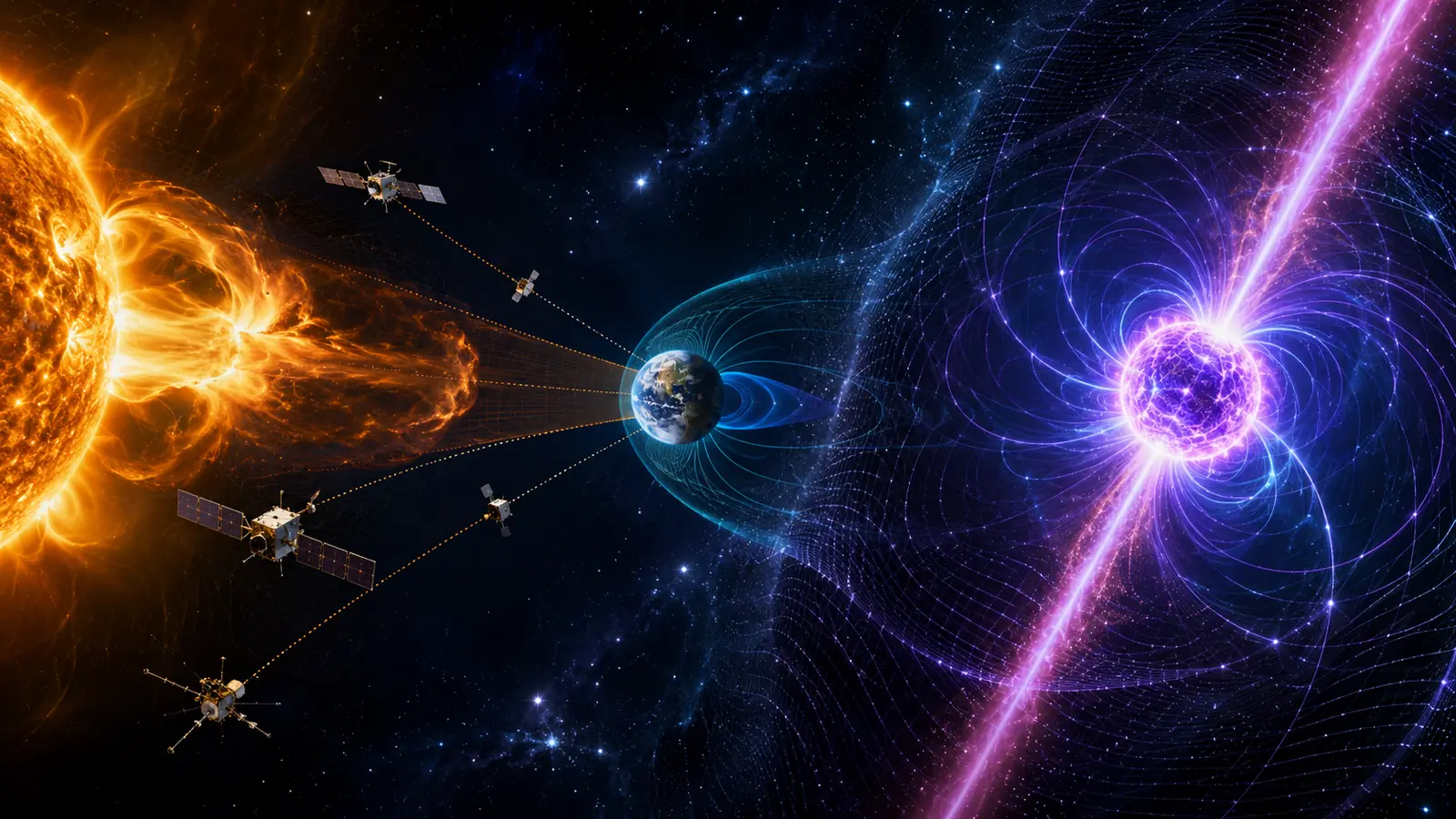
What happened. NASA described the PUNCH mission’s first proof of concept on August 4. Four spacecraft in low Earth orbit produce continuous three-dimensional observations of the inner solar system and can track a coronal mass ejection almost to Earth, adding an image every four minutes. Previously, an ejection could usually be observed for only about the first fifth of its journey.
The team retrospectively analyzed an eruption that left the Sun on May 31, 2025. Twelve hours after departure, its model settled on an arrival eight hours later. The estimate was ultimately accurate to within half an hour—ten times narrower than the five-hour window provided by current methods. That additional precision could help power-grid operators, satellite teams and astronauts time protective procedures more effectively.
What remains unproven. This was one retrospective event using a basic model. The result was presented at a scientific meeting and is still under review at the journal Space Weather. It is not yet a general operational service guaranteeing 30-minute precision for every storm. The next test is performance across different eruptions, difficult geometries and true forward forecasts where the outcome is not already known.
10. IXPE records the strongest evidence yet for vacuum birefringence
What happened. NASA reported on August 5 that researchers had made the first coordinated radio and X-ray polarization measurement of a magnetar, 1E 1547.0−5408. IXPE observed it for more than 140 hours in March and April 2025 alongside NICER and the Murriyang radio telescope at Parkes. Its X-ray polarization was nearly three times stronger than in comparable sources and varied coherently as the star rotated.
Standard surface-emission models do not explain the strength. The team’s simulations best reproduce the signal when they include vacuum birefringence, an effect predicted by quantum electrodynamics in 1936. Under an extreme magnetic field, empty space behaves slightly like a prism, affecting light differently according to its polarization direction. A magnetar’s field is intense enough to expose an effect that cannot be reproduced in a laboratory on Earth.
Why the wording remains careful. NASA says the mission “may have” proved the theory, not that it conclusively did so. The Nature paper and coordinated radio and X-ray constraints make this the most compelling signal so far, but observations of other magnetars are needed to separate the quantum effect from an unmodeled feature of the object’s geometry or emission. Repetition is what can turn a persuasive interpretation into a robust test of a 90-year-old prediction.
What to watch this week
- Luna rollout. Whether unlimited text and the Think button reach Free and Go accounts on schedule, and what abuse limits appear in practice.
- Astra evaluation. Final results, external testing and future access conditions matter more than speculation about a release date.
- ChainDrop impact. Updated version lists, revoked credentials and confirmed incidents will clarify the actual rather than merely potential scope.
- Post-patch WordPress. Administrators need log review, plugin testing and a verified restore path, not just an automatic-update checkmark.
- Operational WeatherNext. Reproduction of the open model and adoption by weather agencies will show how research gains translate into public warnings.
- Consumer availability. Ask Maps regions, supported HDR10+ ADVANCED titles and television updates will continue to roll out unevenly.
Conclusion
The week’s common thread is a shift from demonstrating capability to managing consequences. For models, that means effort controls, stronger isolation and narrower permissions; for open source, exact-version and secret hygiene; for forecasts, ensembles and explicit uncertainty; and for consumer agents, a human confirmation before the final action. The most useful technology is not simply the one that performs more steps, but the one that exposes its boundaries, leaves an auditable trail and can still be stopped before an irreversible outcome.




Join the conversation
Stay on topic and respect other readers. Your first comment may appear after editorial review.