
Updated September 5, 2026: clarified watermark implementation and access to the detection API.
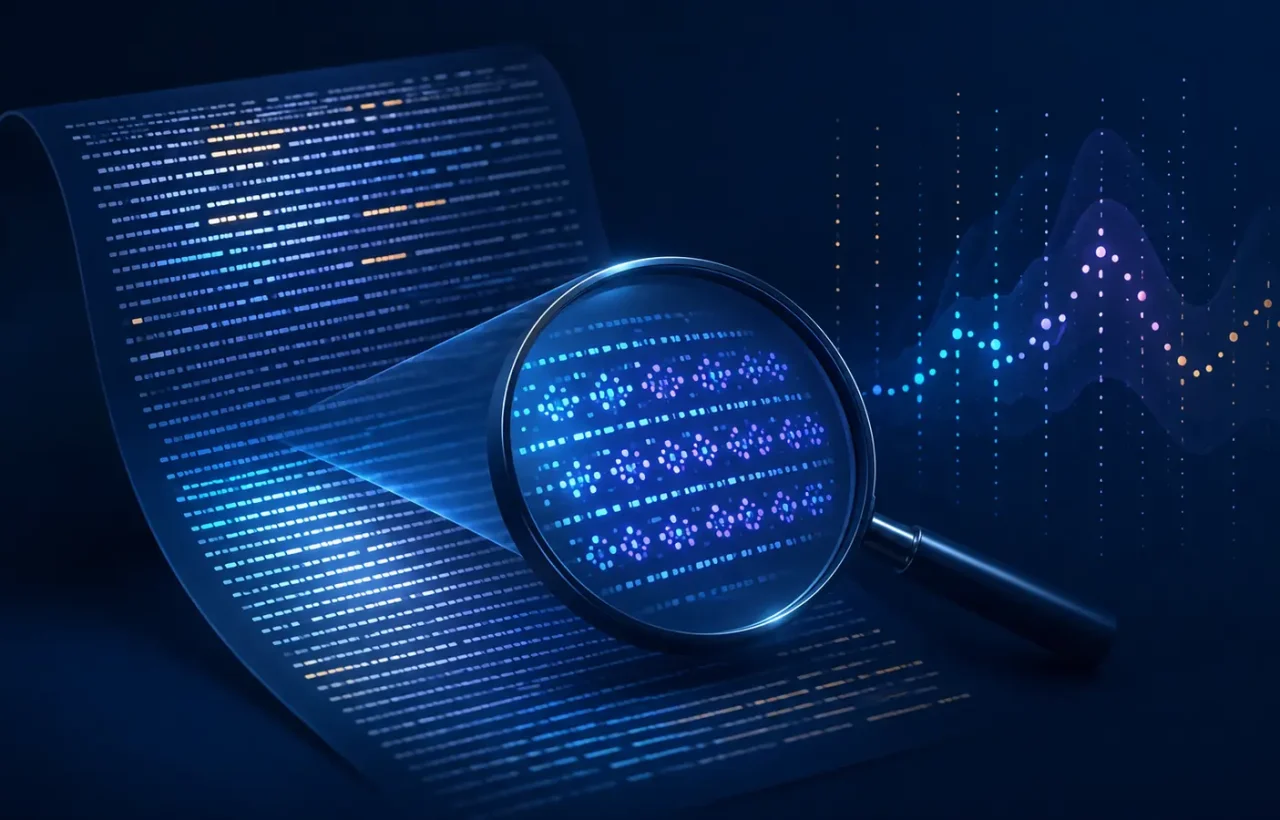
Anthropic is implementing statistical text watermarking in new Claude models. Readers cannot see the signal, but a detector with the appropriate key can look for the pattern. It is not a string of hidden characters, a tag for an individual user, or conclusive proof of who wrote a document. At most, it can help estimate the likelihood that Claude was involved in writing or substantially editing the text.
The change is connected to EU AI Act transparency rules that began applying on August 2, 2026. It also speaks to a broader practical question: can AI-written text be identified reliably? The short answer is that watermarked Claude text can sometimes carry a detectable technical signal, but one detector result cannot establish authorship, intent, truthfulness, or misconduct.
What Anthropic actually announced
Anthropic described the marking method in its August 14 explanation. Its September Claude Fable 5.1 and Mythos 5.1 announcement now confirms watermarking in text outputs from models released after August 2, 2026. Older models have a separate gradual rollout. This does not confirm a signal in every previously generated response.
Anthropic describes applying watermarking globally at the start of implementation. The company says it does not yet have a durable way to limit the implementation by region. Anthropic’s September 1 update confirms a detection API in private preview for eligible organizations. This is not a public detector.
How a watermark can exist in ordinary text
A language model constructs an answer sequentially by choosing the next token, which may be a word, part of a word, punctuation, or another fragment. Sometimes only one continuation is acceptable: after “2 + 2 =”, the model cannot freely substitute another number. In many sentences, however, several next words can be almost equally appropriate. A day might be described as “overcast” or “grey” without changing the central meaning.
The watermark uses these low-stakes choices. A key, together with a few preceding words, influences the source of randomness used to select among suitable alternatives. Repeated across a longer passage, those choices form a statistical pattern. A person reading the answer cannot see it, but a detector that knows the key can compare the actual word sequence with the pattern expected from a watermarked model.
Anthropic is using a version of Google DeepMind’s SynthID-Text approach. The underlying peer-reviewed research describes a scalable method for watermarking large language model output. It does not append a special label, zero-width spaces, or another piece of content that can be revealed by turning on “show hidden characters.”
- Claude identifies a set of acceptable next tokens.
- When multiple options can preserve the meaning, the key influences the random choice among them.
- Many such choices create an imperceptible statistical signal.
- A detector analyzes a sufficiently long passage and returns a likelihood score, not an infallible yes-or-no verdict.
Anthropic says the process requires no extra tokens, has a negligible effect on speed, and does not make the model more expensive to use. It also reports no practical reduction in content quality, creativity, or readability in its internal testing. These are useful provider findings, but they do not make detection equally reliable for every language, length, or kind of text.
What the detector can indicate
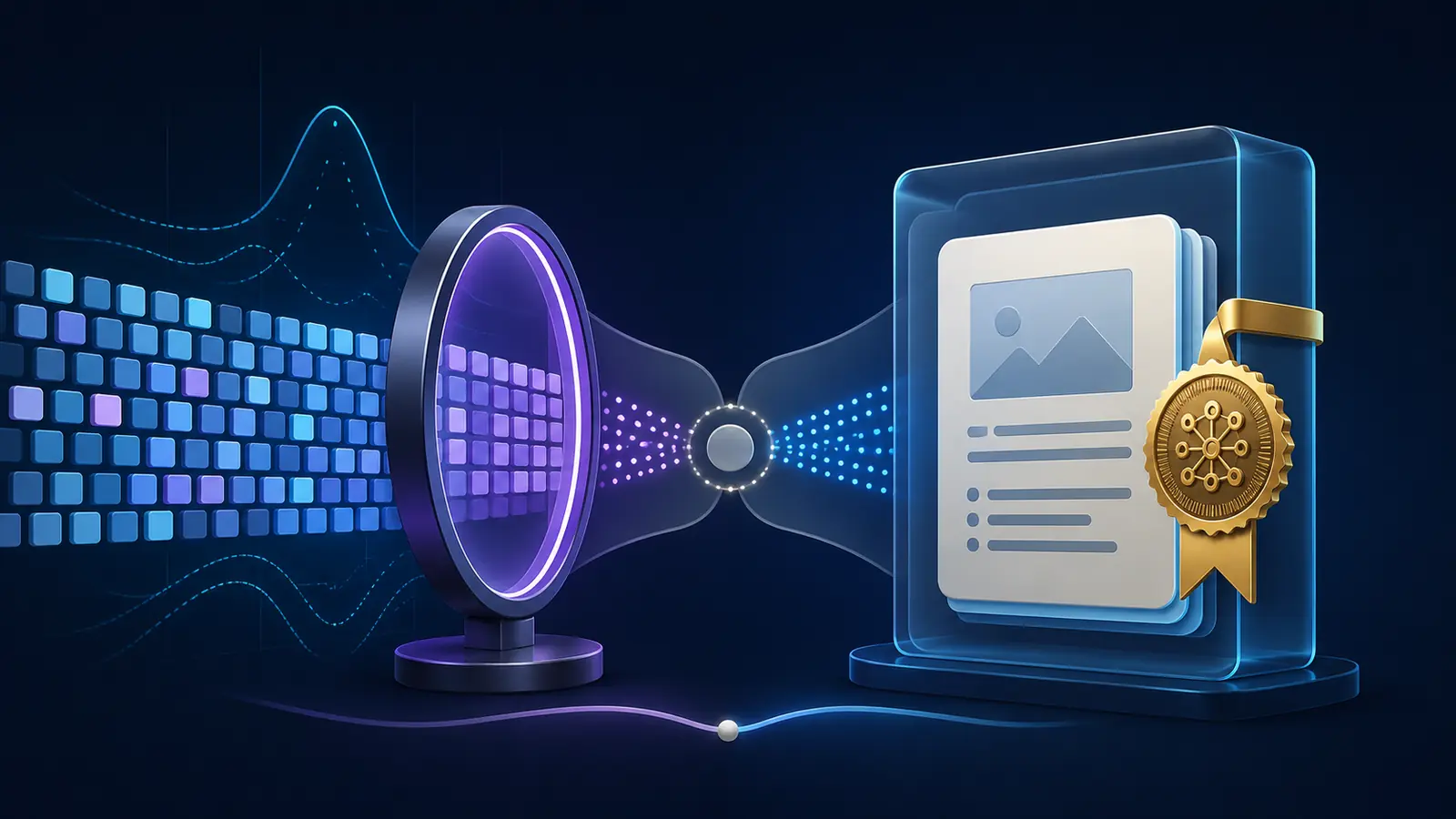
The check answers a narrow question: how likely is it that this passage was partly produced by Claude using a particular watermark? A longer, more varied passage gives the system more word choices to evaluate and can support greater confidence. The result remains probabilistic, however, and depends on length, content type, editing, language, and the detector’s threshold.
A watermark may be evidence that:
- Claude generated a substantial portion of a longer passage;
- Claude substantially rewrote material supplied by a person;
- a translation was generated directly by Claude;
- light editing left enough of the original statistical pattern to remain detectable.
It cannot prove:
- who opened Claude or who owned the account;
- which chat, organization, or device produced the answer;
- that AI wrote the entire document without human contribution;
- that a passage without the signal must be human-written;
- whether another model with a different key or watermarking method was used;
- that its facts are accurate or its quotations are genuine;
- who owns the output or bears legal responsibility for it.
The watermark contains no identifier for a person, company, or conversation. Anthropic says the key cannot be used to recover information about the user. Watermarking also does not change ownership under the provider’s terms and does not remove responsibility from the person or organization that decides to publish the material.
Where detection becomes weaker
Short samples. A short passage may contain too few choices to separate a deliberate pattern confidently from chance. A high or low score for a short message therefore needs especially cautious interpretation.
Factual answers. A name, date, formula, or precise definition often gives the model little freedom to replace words safely. The watermark is not supposed to push Claude toward a less accurate answer merely to create a stronger signal.
Code. Function names, operators, syntax, and much of the logic must be exact. Comments and surrounding explanations may contain more detectable choices, but the code itself offers fewer opportunities.
Proofreading. If a person asks Claude to fix only punctuation and a few spelling mistakes, nearly all the words remain the person’s. The small number of changes may not be sufficient to reveal Claude’s involvement.
Extensive rewriting. Anthropic expects light editing may leave the signal intact, while replacing every formulation can remove it. Google’s original SynthID-Text explanation similarly says confidence can fall sharply after a watermarked passage is thoroughly rewritten or translated.
Editing and translation create different cases
When Claude generates a translation directly, it selects virtually every word in the target language, so Anthropic expects that output to carry a watermark. The situation changes if a person or another service translates an already-watermarked English passage: the original sequence of choices is replaced, and a detector looking for the old signal may lose confidence.
Proofreading should also be separated from co-writing. Correcting spelling does not make an entire document “written by Claude,” while reworking whole sections gives the model many more decisions. Even a positive result does not reveal which workflow occurred. Anthropic explicitly says the watermark cannot distinguish “Claude wrote this” from “Claude heavily edited this.”
How this differs from generic AI text detectors
Most public AI detectors do not possess a model provider’s secret key. They analyze style, predictability, sentence length, repeated constructions, and other statistical features. A classifier can label formal human writing as AI-generated or miss a heavily edited model response. Its performance may also change across languages, genres, and sample lengths.
Watermark detection is narrower but tied to a signal deliberately created at generation time. That does not make it infallible: the signal may be sparse, the sample short, or the text modified. Preview participants need documentation covering thresholds, false-positive rates, supported languages, and model versions, alongside checks on relevant samples. Access to the API alone does not establish its accuracy for every task.
A detector also does not fact-check the answer. A technically confirmed Claude passage can still contain an error, while a human can invent a claim. Content verification remains a separate job: locate the primary source, confirm the date and context, and use our guide to fact-checking AI answers.
Supported Claude-generated files will use C2PA instead
For supported files, including PNG, JPG, and SVG, Anthropic describes a different mechanism. It plans to attach a small cryptographically signed note in the metadata using the open C2PA Content Credentials standard. A compatible tool will be able to read the record showing that Claude created or processed the file.
This is not the same signal used for text. A Content Credential is a provenance record in the file structure, while the text watermark is encoded in the statistics of word selection. The credential does not name the individual user or prove that every part of the file was made without human involvement. Its absence alone cannot establish authenticity, so provenance data complements rather than replaces visual and contextual checks. Our guide to spotting deepfakes covers those additional steps.
Why this is arriving after August 2
The European Commission explains that the Article 50 AI Act transparency obligations began applying on August 2, 2026. Providers in scope must mark covered synthetic content in a machine-readable, detectable form, subject to the Act’s exceptions and transition rules.
Anthropic and other companies signed the Code of Practice on Transparency of AI-Generated Content. Signing the code is a voluntary route for demonstrating compliance; the underlying Article 50 legal obligations are not voluntary. Separate duties may require visible disclosure for deepfakes and AI-generated public-interest text. Website owners, freelancers, and small teams can use our practical AI Act transparency checklist to map those roles and exceptions.
How to use a detector result responsibly
For schools and universities
A student should not be penalized automatically because one detector produces a percentage. First examine the sample length, the assignment’s rules, permitted editing assistance, and the possibility of error. Drafts, research notes, source lists, version history, and a short oral explanation of the argument offer more useful evidence about the work process.
For employers
A policy should distinguish generation of a new document from translation, grammar checking, or permitted brainstorming. A positive signal can begin a conversation about process, but it does not establish a data leak, contract breach, or author. Do not upload confidential employee or client documents to an arbitrary third-party detector without reviewing its privacy and retention terms.
For editors and publishers
A watermark cannot replace an editor. Primary sources, quotations, numbers, dates, media rights, and the match between headline and evidence still require verification. Keep a revision trail and name the human responsible for publication. Technical marking can indicate possible tool involvement; it cannot certify the quality of the journalism.
Frequently asked questions
Is every Claude response already watermarked?
Do not assume every Claude response carries the signal. Anthropic describes watermarking for models released after August 2, 2026, and a separate gradual rollout for older models.
Can I reveal the watermark by searching for hidden characters?
No. Nothing is appended to the text. The signal lies in the statistical pattern of selected words and requires a purpose-built detector with the corresponding key.
Does it reveal the Claude user’s name?
No. Anthropic says the watermark contains no identifier for a user, organization, account, or chat.
Will translated text remain detectable?
A translation generated directly by a watermarked Claude model should receive its own signal. Translating an existing passage through a person or another system may weaken or destroy the original language’s pattern.
Where can I check a passage now?
The API is in private preview for eligible organizations, including media, researchers, educational institutions, regulators, and enterprises with relevant AI Act obligations. An access-interest form is linked from Anthropic’s official explanation. Access is not open to everyone.
Bottom line
Claude’s watermark is a technical provenance signal, not a test of honesty. It may help identify the likely involvement of a watermarked Claude model in a sufficiently long passage without adding hidden characters or exposing the user’s identity. Short, factual, edited, and translated material will still leave substantial uncertainty.
The responsible approach is to combine technical checks with evidence of the work process, source verification, and human accountability. When using the API, the important details extend beyond the “check” button: thresholds, language coverage, false-result rates, model support, and rules for using the score in consequential decisions matter just as much.




Join the conversation
Stay on topic and respect other readers. Your first comment may appear after editorial review.