

Browser updates, new computers for local AI and features arriving gradually in user accounts: here are 12 developments from August 24 to September 6, 2026. This issue covers two weeks, W35 and W36. We start with updates worth checking now and distinguish announced products from features already available.
Browser, Windows and website security
1. Chrome: a patch for a vulnerability with an exploit in the wild
On September 3, Google released a Chrome update and confirmed an exploit for CVE-2026-85046 in the wild. Check your version and complete the update by relaunching. Our separate Chrome update article lists the relevant builds and walks through the steps for different operating systems.
2. Firefox 155 brings security fixes; 155.0.1 adds further repairs
Mozilla released Firefox 155 on September 1 with high-impact security fixes. Separately, mailto links changed: a website must wait for an explicit user action before launching an email application.
The 155.0.1 update followed on September 4, fixing hangs on certain pages with CSS blur effects and a sidebar that failed to return after restart. Check for the current update on your Firefox channel rather than stopping at the number 155. Unlike the Chrome announcement, this Mozilla advisory does not establish active exploitation of the listed flaws.
3. Windows will expand automatic memory integrity protection from October
On September 1, Microsoft announced a forthcoming expansion of memory integrity protection. Starting with updates in October 2026, Windows will gradually enable it on additional eligible devices after checking hardware and software readiness. This is a future rollout announcement, not a completed September activation.
Existing administrator policies and user choices remain in effect: devices where memory integrity was previously disabled will not be switched automatically. Do not assume that the new policy has already protected your particular PC. Check its actual status and driver compatibility using Microsoft’s documentation.
4. Cloudflare makes BotBase registration clearer for bot operators
On August 28, Cloudflare launched BotBase for Operators. Developers can submit bots, track application status, read rejection reasons and edit details. Submissions describe bot behavior and content use, helping publishers distinguish search crawling, assistants acting for users and collection for AI training.
The BotBase directory already existed; this update concerns operator tools. Registration does not grant automatic access to every website: site owners retain that decision. Opening submissions to all customers also does not make Enterprise analytics free. Clearer identification helps owners make informed choices about automated traffic.
Computers, Android and everyday tools

5. Apple refreshes Mac mini and Mac Studio for local AI
On August 25, Apple announced Mac mini with M6 or M5 Pro and Mac Studio with M5 Max or M5 Ultra. For local AI, Studio’s standout specification is up to 512GB of unified memory with M5 Ultra, expanding the range of models that can fit on the computer.
These are announcements and preorders: deliveries begin September 22, while the 512GB Studio configuration is due in late October. Mac mini with M6 starts at $899 in the US; local prices will differ. Apple’s advertised AI speed increases come from its own measurements of specific workloads.
6. Lenovo previews Yoga laptops with RTX Spark for local AI
At IFA on September 3, Lenovo announced the Yoga Pro 9n and Yoga 9n 2-in-1 with NVIDIA RTX Spark. It specifies up to 128 GB of unified memory for the former and 64 GB for the convertible, targeting local AI, development and creative work.
Prices and availability for these two laptops remain unannounced. The memory capacity makes them interesting candidates for running models locally. A buying decision still needs confirmed configurations, application compatibility and independent measurements. These are announced products, not shipping devices reviewed by RozumTech.
7. Android Drop: shared notes are rolling out; remembered items come later
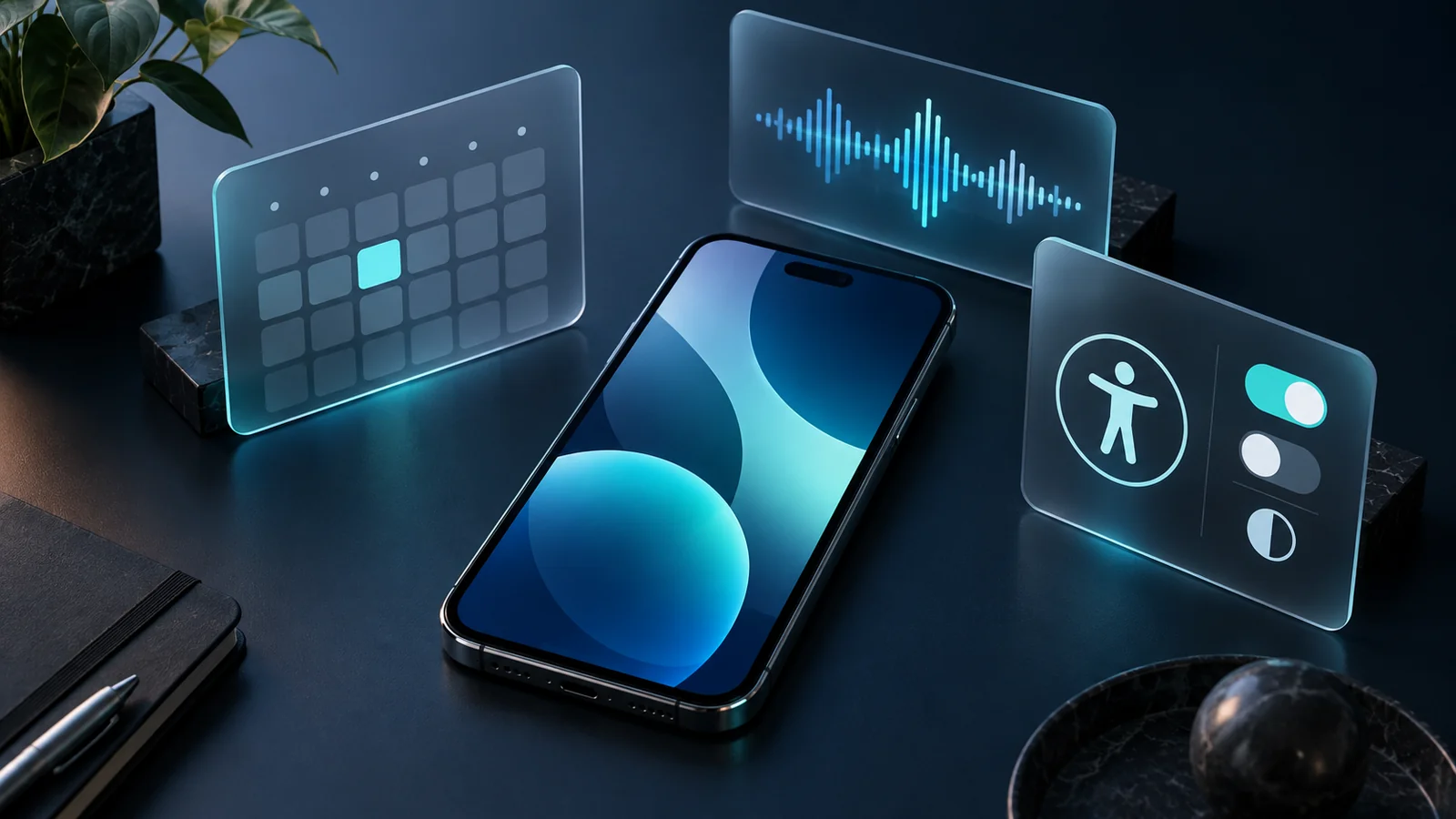
Google’s September 1 Android Drop combines features with different launch schedules. Shared Google Keep notes in Messages started rolling out. Asking Gemini to remember where an item is stored and retrieving that note through Find Hub is still coming soon; it requires Android 16 or later and a supported region.
One system update will not unlock the entire list on every phone. For example, Motion Assist for reducing travel discomfort requires Android 17. Before searching for a missing button, check your operating system, the relevant application and the feature’s availability for your account.
8. Google Calendar makes Teams, Zoom and Webex calls easier to join
On August 27, Google began updating Calendar for third-party video meetings. Outgoing invites place supported Teams, Zoom and Webex links in the location field, where Outlook or Apple Calendar can make them more visible. Incoming invitations have their conference details recognized and presented as a join button on web and mobile.
For teams using different calendars, this means less hunting through event descriptions. The feature covers work and personal accounts and is enabled automatically. Rollout may take more than 15 days, so it is not necessarily available to everyone by September 7.
AI for audio, video, images and work

9. Gemini 3.5 Transcribe separates live speech from recorded audio
On August 26, Google introduced Gemini 3.5 Transcribe with separate APIs for live speech and recorded audio. Ukrainian is supported. Developers can choose verbatim transcription or Smart mode, which removes filler words and formats text. For interviews, a readable account and a faithful transcript serve different purposes.
A live session lasts up to ten minutes and offers neither speaker identification nor word-level timestamps. Those features are available for recorded audio, but cannot be combined with Smart mode. Important names and numbers still need checking before the result is used.
10. Omni 1.1 Flash adds more control over generated video
On August 27, Google announced Gemini Omni 1.1 Flash, adding first-and-last-frame control and video extensions in ten-second increments, up to 40 seconds overall. Drafts can use 360p resolution, letting creators check an idea before spending resources on the final output.
The documentation makes an important distinction: 1080p and 4K are upscaled, while the default is 720p. The update reaches developer tools and Flow for Google AI Plus, Pro and Ultra subscribers. In the Gemini app, Google specifically announced scene extension for those same subscription tiers.
11. GPT-6 Astra: a new model with phased access
On September 3, OpenAI introduced GPT-6 Astra, emphasizing computer use, coding and multistep work. Access began with a limited group of organizations and is expanding gradually. The launch benchmarks are OpenAI’s results, not our own measurements.
Access also differs by mode: the current help page says Plus receives Astra in Work/Codex during the rollout, while GPT-6 Pro in Chat is available on Pro, Business and Enterprise. Having Plus alone therefore does not guarantee that option in ordinary chat. See our Astra explainer for more context.
12. Google Pics reaches Workspace on different domain schedules
On September 1, Google began rolling out Google Pics for AI image creation and editing. Rapid Release domains started on September 1; Scheduled Release is due to begin on September 15. Each stage can take up to 15 days.
If the service is missing on September 7, that does not necessarily indicate a fault. Check your subscription’s eligibility and your administrator’s release schedule. Our Google Pics article covers editing scenarios, access conditions and questions to consider before uploading work images.
Previous issue: Tech Week in Brief, August 17–23. Dates and access conditions in this digest were checked on September 7; subsequent rollouts may change availability.




Join the conversation
Stay on topic and respect other readers. Your first comment may appear after editorial review.